The Role of Expert Witnesses in Alabama Car Crash Cases

After a serious car crash, the immediate aftermath is chaotic. The physical evidence—skid marks on the pavement, the position of the vehicles, the crumpled metal—offers clues, but it does not always tell the whole story. While eyewitnesses can describe what they saw, their perspectives can be limited or even contradictory. When the cause of a collision is not immediately obvious, or when the long-term consequences of an injury are difficult to measure, a car accident claim can become far more complex. This is when the analysis of a specialized professional, often referred to as an expert witness, becomes an important component of a case.

What Is the Distinction Between a Lay Witness and an Expert Witness?

In any legal proceeding, there are two primary categories of witnesses: lay witnesses and expert witnesses. A lay witness, such as a bystander who saw the collision, can only testify about facts they personally observed through their senses—what they saw, heard, or smelled. They can describe the cars, the weather, and the sequence of events as they perceive them.

An expert witness, on the other hand, is permitted to do something a lay witness cannot: offer a professional opinion. Based on their specialized knowledge, skill, experience, training, or education, an expert can analyze a set of facts and draw conclusions to help others make sense of complex information. For example, while a lay witness can say they saw a car swerving, an automotive engineer acting as an expert witness can analyze the wreckage and offer a professional opinion on whether a mechanical failure caused the swerving.

Why Are Expert Witnesses So Important in Car Accident Claims?

The testimony and reports from expert witnesses serve several key functions in a car accident claim. Insurance companies often dispute liability or downplay the severity of injuries to minimize what they have to pay. An expert’s objective findings can effectively counter these tactics.

Here are some of the main reasons their involvement is so valuable:

  • Explaining Complex Evidence: Experts can translate highly technical information into clear, accessible terms. A forensic toxicologist can explain the effects of a certain blood alcohol level on a driver’s reaction time, or a biomechanical engineer can describe how the force of an impact would lead to a specific type of spinal injury.
  • Establishing Causation: Proving that the other driver’s actions directly caused your injuries is a fundamental requirement of any personal injury claim. An accident reconstructionist can link a driver’s excessive speed directly to the collision, and a medical professional can connect the collision directly to a victim’s need for future surgery.
  • Calculating Full and Fair Damages: Many of the most significant losses in a serious injury case are not in the past but in the future. Experts like life care planners and economists are essential for calculating the long-term financial impact of an accident, including future medical costs and lost earning capacity.
  • Rebutting the Opposing Side: The at-fault driver’s insurance company may hire its own experts to dispute your claim. Your legal team must be prepared to counter their findings with credible, well-reasoned analysis from your own qualified professionals.

Common Types of Expert Witnesses in Alabama Car Crash Cases

The specific facts of a car crash will dictate which types of experts are needed to build the strongest possible claim. An experienced legal team will know how to identify the right professional for the job.

Accident Reconstructionist

These professionals are often former law enforcement officers or engineers with specialized training in physics and engineering. They act as forensic investigators for car crashes, using physical and digital evidence to piece together precisely how a collision occurred. An accident reconstructionist will analyze:

  • Physical Evidence from the Scene: Skid marks, yaw marks, gouges in the pavement, and the location of debris.
  • Vehicle Damage: The extent and location of damage can reveal the angle of impact and the relative speeds of the vehicles.
  • Event Data Recorder (EDR) Information: The “black box” in modern vehicles can provide invaluable data on speed, braking, acceleration, and steering inputs in the seconds before impact.
  • Police Reports and Witness Statements: This information provides context for the physical evidence.

Based on this analysis, a reconstructionist can offer opinions on matters like vehicle speed, driver actions, and the sequence of events.

Medical Professionals

Medical evidence forms the foundation of any personal injury claim. While your own treating physician can testify about your injuries and treatment, sometimes a specialized medical expert is needed.

  • Specialty Physicians: Neurologists, orthopedic surgeons, or pain management doctors can offer detailed opinions about the severity of specific injuries, the prognosis for recovery, and whether the injuries are consistent with the forces involved in the accident.
  • Life Care Planners: For catastrophic injuries resulting in permanent disability, a life care planner is indispensable. This professional, typically a nurse or rehabilitation counselor, conducts a comprehensive assessment to project the injured person’s medical and personal care needs for the rest of their life. Their detailed report will itemize costs for things like future surgeries, medications, assistive devices, in-home care, and necessary home modifications.

Vocational Rehabilitation Professionals

A serious injury can have a profound impact on a person’s ability to work and earn a living. A vocational rehabilitation professional assesses this impact. They will review the injured person’s education, work history, and skills, along with their medical limitations, to determine their capacity for future employment. They can answer questions like:

  • Can the individual ever return to their previous job?
  • If not, what other types of work are they capable of performing?
  • What is the difference between their pre-accident and post-accident earning capacity?

Economists and Financial Analysts

An economist takes the reports from life care planners and vocational professionals and translates those findings into a specific dollar amount. They use economic principles and statistical data to calculate the total economic losses suffered by the victim. This includes:

  • Past and future lost wages.
  • The present-day value of future medical care.
  • The loss of earning capacity over a lifetime.
  • The value of lost household services (such as childcare or home maintenance) the person can no longer provide.

Their calculations provide the jury with a clear, justifiable figure for the economic damages portion of the claim.

Mechanical Engineers or Automotive Specialists

If there is a question of whether a vehicle defect caused or contributed to the crash, these experts are brought in. They can inspect the vehicle to determine if a critical component failed. This could involve issues such as:

  • Brake failure
  • Tire defects or blowouts
  • Steering or suspension system malfunctions
  • Airbag failures

Their findings can sometimes lead to a product liability claim against the vehicle or parts manufacturer.

Human Factors Experts

These experts focus on the intersection of human psychology and engineering. They analyze driver perception, reaction time, and decision-making. A human factors expert might be retained to address issues such as:

  • Driver Distraction: Explaining how using a cell phone impairs a driver’s ability to react to hazards.
  • Visibility: Determining whether a driver’s line of sight was obstructed.
  • Perception-Response Time: Calculating the time a reasonable driver would have needed to perceive a hazard and take evasive action.

The Process for Qualifying an Expert Witness in Alabama

A person cannot simply declare themselves an expert in court. They must be formally qualified through a process overseen by the judge. Under the Alabama Rules of Evidence, the party presenting the expert must show that the individual has the necessary knowledge, skill, experience, training, or education in their field.

Alabama courts, like federal courts, follow the Daubert standard. This standard requires the trial judge to act as a “gatekeeper” to ensure that an expert’s testimony is not only relevant but also reliable. This means the expert’s opinion must be based on sound scientific principles and methods, not just on personal speculation. Opposing counsel has the right to challenge the qualifications of an expert and the reliability of their methods in a pre-trial hearing.

Using Expert Testimony to Defeat the Contributory Negligence Defense

Alabama is one of the few states that still follows the harsh legal doctrine of pure contributory negligence. This rule states that if an injured person is found to be even 1% at fault for the accident that caused their injuries, they are completely barred from recovering any compensation.

Insurance companies are well aware of this rule and use it as a powerful defense. They will often try to shift even a small amount of blame onto the victim to avoid paying the claim. An expert witness can be your strongest weapon against this defense. For example, an accident reconstructionist can provide a scientific, fact-based analysis demonstrating that the other driver was 100% at fault, leaving no room for an insurer or jury to assign blame to you.

How a Knowledgeable Attorney Works with Expert Witnesses

Retaining and presenting expert testimony is a complex process that requires a skilled legal advocate. An attorney experienced in handling serious car crash cases will manage every step of this process.

  • Identifying the Right Professionals: A thorough lawyer can analyze the facts of a case and determine precisely which types of experts are needed to prove liability and damages.
  • Leveraging an Established Network: Experienced attorneys have developed relationships with a network of credible, respected professionals who have been vetted and have a track record of providing solid, defensible analysis.
  • Presenting Complex Information: A key skill of a trial lawyer is the ability to work with an expert to present their complicated findings to a jury in a way that is clear, compelling, and persuasive.
  • Challenging the Other Side’s Experts: Just as importantly, a skilled attorney knows how to cross-examine the experts hired by the insurance company, exposing weaknesses in their logic, biases in their analysis, or flaws in their methodology.

Let McPhillips Shinbaum Review the Details of Your Case

A car crash can turn your life upside down in an instant, and the path to recovery is often complicated. When a case involves complex questions of fault or requires a detailed projection of future damages, the testimony of a qualified expert witness can be the deciding factor in securing a fair outcome. Building a case with this level of detail requires knowledge, resources, and a commitment to meticulous preparation. Attorney Aaron Luck and the dedicated team at McPhillips Shinbaum are here to help. We are prepared to investigate every facet of your accident, engage the right professionals to support your claim, and advocate for the full compensation you deserve.

Contact us today for a consultation to discuss your legal options. You can reach us online or call us at 334-262-1911 to set up an appointment.
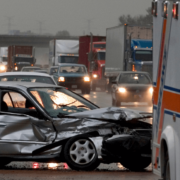

Who Is At Fault in Highway On-Ramp Collisions?

On-ramp collisions often happen when vehicles are merging from an entry ramp onto a highway. On-ramp collisions can be caused by a variety of factors, such as the merging vehicle’s speed, distracted driving, or poor weather conditions. The merging process can be tricky because it requires cooperation between drivers on the highway and those entering from the ramp. If cooperation is poor, on-ramp collisions can occur. With all of these factors at play in on-ramp collisions, it should be no surprise that on-ramp collisions are fairly common.

Injured in a crash? Let’s talk about your options. Attorney Aaron Luck at McPhillips Shinbaum is here to help with your personal injury claim. Call us at 334-262-1911 to discuss your options now.

Role of the Merging Driver

Merging drivers must make sure it’s safe before entering the highway to avoid on-ramp collisions. This means matching the speed of the traffic and finding a proper gap to merge. If a merging driver fails to do this, they can be held responsible for any collision.

Responsibilities of Drivers Already on the Highway

Drivers on the highway should keep a steady speed and avoid sudden lane changes to avoid on-ramp collisions, especially near on-ramps. Although they aren’t obligated to make space for merging cars, being considerate and driving defensively can help prevent accidents. If a driver on the highway is speeding or behaving recklessly, they might also share some of the blame for an accident.

State Laws in Alabama Regarding On-Ramp Collisions 

Understanding Alabama’s traffic laws can help clarify fault in on-ramp collisions. In Alabama, merging drivers are required by law to yield to vehicles already on the highway. This means that the merging driver must wait for a safe gap in traffic before entering the highway. Additionally, Alabama law stresses the importance of merging at a speed that matches the flow of highway traffic as closely as possible.

If a merging driver fails to yield or does not adjust their speed appropriately, they could be held responsible for any resulting on-ramp collisions. Neglecting to use turn signals while merging can also be a factor in determining fault. On the other hand, drivers already on the highway are expected to maintain a steady speed and avoid erratic maneuvers.

While they aren’t legally required to make room for merging vehicles, reckless or aggressive driving by highway drivers can contribute to an accident and may share in the blame.

Evidence and Documentation for On-Ramp Collisions

After an on-ramp accident, gathering evidence is essential. Documentation can help establish what occurred and who may be at fault. Start by taking photos of the accident scene, capturing vehicle damage, skid marks, and road conditions. These images can be useful for insurance claims and legal proceedings. Additionally, collect contact information and statements from any witnesses.

Their accounts can provide an unbiased perspective on the accident. If possible, obtain any available surveillance footage from nearby cameras, as this can offer a clear view of the incident. Also, be sure to file a police report. A police report includes an official account of the accident and can be an important piece of evidence.

Keeping detailed notes about the accident, including the date, time, weather conditions, and any other relevant details, can also be beneficial. All this information can help paint a comprehensive picture of the event, aiding in the determination of fault.

What If the Other Driver is Liable?

If the other driver is to blame for your on-ramp accident, you may be owed compensation. Remember that under Alabama’s pure contributory negligence law, a victim may not receive compensation if the other party can prove that they share any liability—so you should expect the other driver’s insurance company to look for any errors you made during the crash.

Your personal injury attorney can help you fight for fair and full compensation as you navigate your options after a crash. You could be entitled to compensation for your losses, including your medical expenses, lost wages, pain and suffering, and other expenses.

Choose McPhillips Shinbaum for Your Claim for On-Ramp Collisions

The team at McPhillips Shinbaum is committed to helping victims like you seek justice after an accident. If an on-ramp collision has left you injured and unsure of what to do next, don’t go through this alone. Let’s discuss your legal options now. Set up a consultation by calling us at 334-262-1911 or sending us a quick message online.

What Does Maximum Medical Improvement Mean in a Car Crash Claim?

The process of recovering from a car crash can be long and tiring. Your days can become a blur of follow-up appointments, treatments, prescription medications, and insurance claims. You’ll learn a lot of new and unfamiliar terms during this time, including “maximum medical improvement.” Maximum medical improvement, or MMI, can play a crucial role in your personal injury claim and your compensation.

Explore the concept of MMI and find out how it may influence your claim. When you’re ready to start your personal injury claim, call McPhillips Shinbaum at 334-262-1911.

Is MMI the Same as Making a Full Recovery?

If this is your first serious injury, the term MMI may seem unnecessarily wordy—can’t you just say that someone has made a full recovery? However, MMI is not necessarily the same as a full recovery. Maximum medical improvement is a medical and legal term that is used to specify a very specific point in a patient’s treatment where they have recovered as much as they are ever going to. Yes, in some cases, this means making a full recovery. But in others, a complete recovery may be impossible or incredibly unlikely. In these situations, MMI is some point short of a full recovery.

If your doctor says that you have reached MMI, it means that you have plateaued in your recovery. You may still have some pain or symptoms, and even physical limitations, but you may have those for the rest of your life. While you may make some minor improvements in the future, they are negligible when compared to the rest of your recovery and their impact on your health.

 How is MMI Determined?

MMI is primarily a medical term, so the determination is made by the physicians treating you throughout your recovery. There are numerous factors they use to determine when a victim has reached maximum medical improvement.

One important part of figuring out MMI is a thorough medical evaluation. This involves looking over where your injuries started, what treatments you have tried, how those treatments have impacted you, and what remaining symptoms and limitations you may have. The doctor will also use a range of diagnostic tests to see how much progress you have made, any complications you’ve suffered, and any remaining issues.

It’s also likely you’ll undergo a functional assessment to determine whether or not you have reached MMI. The doctor may look at how you engage in daily tasks, complete your work, care for your children, and fulfill other obligations. This is less about determining if you’ve reached MMI and more about figuring out if you have any lingering limitations, as well as determining any accommodations you may need in the future.

Previous cases similar to yours can be important in your personal injury claim. Doctors may look at the healing timeline of patients with similar injuries, their progress after certain types of treatments, and when they reached MMI.

How MMI Can Affect Your Compensation

Maximum medical improvement plays a massive role in the compensation you receive as a victim. First, reaching MMI is crucial for determining your actual damages. Once you’ve reached MMI, you have a much better understanding of how much money your medical care costs. You’ll also better know what type of care you may need in the future, especially if you have significant limitations that will leave you requiring assistance.

Once you’ve recovered as much as you ever will, you will know if you are able to continue working or what accommodations you will need. This makes it easier for your attorney to calculate lost earnings and lost future income.

Finally, MMI is a key part of your non-economic damages. These include pain and suffering, emotional distress and trauma, and loss of quality of life. You can’t really know the long-term impact of your injuries until you know what the rest of your life will be like.

Start Your Personal Injury Claim with the Team at McPhillips Shinbaum

Our team is ready and waiting to talk to you about your accident, injuries, and next steps. Let’s set up a time to talk about your legal options—just reach out online or call us at 334-262-1911.

Important Tips for Avoiding a School Bus Accident

Countless children rely on school buses to get them to school safely and on time. Parents wave to their children as they pull away from the bus stop, rarely worrying that anything could go wrong. Although school buses are an incredibly safe form of transportation with low accident rates, accidents do still occur. Students, parents, and other drivers all play a role in preventing collisions.

If you or someone you love has been injured in a bus collision, don’t wait any longer to explore your legal options. Call McPhillips Shinbaum now to set up a consultation.

Advice for Children

The earlier parents begin teaching their children how to stay safe on and around buses, the better off their children are. Kids rarely think about the possible negative outcomes of their accidents, and it’s our job to protect them from those outcomes without causing anxiety. Parents can focus on teaching their kids these basic tenets of bus safety:

  • Arrive early to avoid rushing. When kids are running to catch the bus, they are more likely to take unnecessary risks.
  • Wait until it is safe to board. Wait until the bus has completely stopped before getting on. This protects you from unexpected jolts that can cause you to hit your head. The same is true when getting off the bus.
  • Avoid distracting the driver. The driver must remain focused on the road to do their job safely. Students can help by staying quiet, staying in their seats, and not trying to interact with the driver.
  • Exit safely and attentively. Children have a tendency to run off the bus to their parents, but that puts them at risk of being hit by a car. Teaching them to exit calmly and after looking both ways is essential.
  • Never cross directly in front of or behind a bus. Buses have enormous blind spots; unintentionally getting in that blind spot could lead to tragedy. Ensure kids know to leave plenty of space when walking around a bus.

Tips for Other Drivers

Other drivers on the road should be extra cautious when driving near school buses. Remember that school buses are closer to large commercial trucks than they are to small passenger vehicles—they need more time to stop, have large blind spots, and are more difficult to drive. Keeping a safe following distance, being patient around buses, and being extra watchful for children can prevent accidents.

It’s also important to know the laws in your municipality. In Alabama, state law forbids other drivers from passing a stopped school bus. You must wait until the bus has resumed moving before going. The same is true even if the bus is on the opposite side of the road and driving in the opposite direction. However, drivers do not have to stop for a school bus if it is on the other side of a divided highway if two lanes allow for traffic to move in the other direction.

Safety Tips for Bus Drivers

Bus drivers are an important line of defense for students and other drivers. While much of this is second nature for bus drivers, these tips ensure student safety and reduce the risk of accidents:

  • Check for mechanical issues before each trip: Buses are under a lot of strain every day, so breakdowns are always a risk. A quick vehicle inspection before each trip can prevent students from being stuck on an overheated bus on the side of the road where they are likely to be hit by inattentive drivers.
  • Always be alert for students near the bus: While kids should know how to move safely near buses, they are unpredictable. Double-checking for children before moving the vehicle is a good habit to establish.
  • Use signals and lights as required: Driving as predictably as possible allows other drivers to stop in time, preventing devastating collisions.
  • Review emergency procedures on a regular basis: Should an accident happen, you want to know exactly what you should do to keep kids safe. Regularly reviewing procedures and expectations ensures that you are ready for anything.

Injured in a Bus Accident? Call McPhillips Shinbaum Today

If you’ve been hurt in a bus collision, you could be entitled to compensation. Let us help you explore your options. Schedule a consultation right away by contacting us online or calling us at 1-866-224-8664.