Lane-Drift Accidents and Their Causes

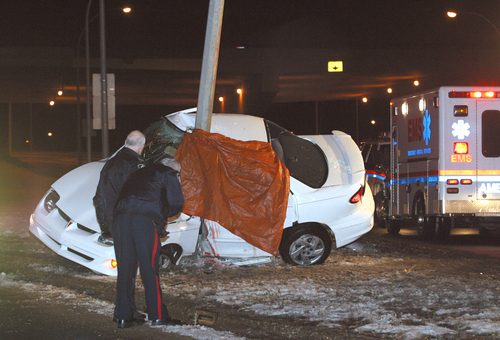
Lane-drift accidents can happen in a moment, even if your attention is only briefly drawn away from the road. A recent study looked at the causes of lane-drift or lane-departure accidents, and ways that technology can better prevent these types of crashes.

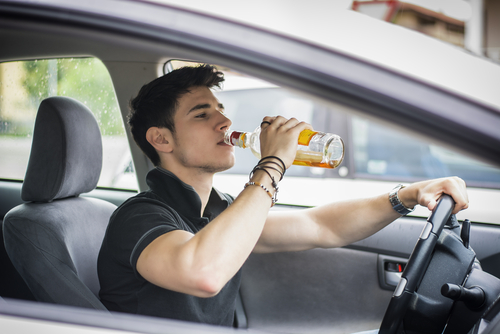
The Insurance Institute for Highway Safety (IIHS) conducted a study on the causes of lane-drift or lane-departure accidents, using data on 631 such accidents as reported to a federal database. 125 of these motor vehicle accidents caused serious or fatal injuries. The IIHS found that, in 34% of all accidents and 42% of all accidents causing death or serious injury, the at-fault driver was incapacitated at the time of the crash. One-half of these drivers had fallen asleep, while the remainder had become incapacitated due to either a medical emergency, such as a seizure or heart attack, or due to intoxication by drugs or alcohol. An additional 8% of crashes resulted from a driver who was found to be legally intoxicated, but who remained conscious. 22% of all lane-drift accidents were the result of driver distraction.

Many new vehicles now offer lane-departure warning systems, which use cameras and sensors to detect whether or not the car is staying in its lane of traffic, alerting the driver with visual or auditory cues if the car has left its lane. However, few such systems offer course-correction capabilities, steering the car back into its lane when it departs unexpectedly. The IIHS suggests, based on the results of its study, that a simple warning is insufficient to prevent a large portion of lane-departure crashes, since many of these drivers have become unconscious; these systems should therefore offer course-correction to become more effective, according to the IIHS.

Sometimes driver incapacity may be entirely unavoidable and something that the driver had no way to predict or prevent. In certain cases, however, drivers may have understood the risk they were taking by getting behind the wheel but chose to do so anyhow. For example, if a driver who was aware that he or she experienced seizures on a regular basis failed to take medicine prescribed for these seizures but still chose to drive, that driver could be held liable for injuries caused by an incapacity-related crash. Likewise, drivers who are aware that their prescribed medications make them drowsy can be held financially responsible for accidents caused by drug-related incapacity. A personal injury attorney experienced in investigating car accidents can help you determine the reasons for a crash that establish the other driver’s liability to you.

If you’ve been injured in an accident due to another person’s negligence, contact your local experienced personal injury attorneys at McPhillips Shinbaum at 334-262-1911.

IKEA Will Pay $50 Million to Settle Wrongful Death Claims

Nothing could be more heartbreaking to a parent than the thought of losing their child in a preventable accident. Tragically, four sets of parents have suffered the deaths of their children as the result of flaws in the design of certain pieces of furniture created and sold by Swedish manufacturer IKEA. Recently, the parents were awarded a collective settlement of $50 million to three of the four families that lost a young child when a piece of furniture toppled onto them.

The trouble with IKEA’s MALM line of furniture began years ago, long before the company took any steps to remedy the issue. As far back as 1989, IKEA began to receive reports of serious injuries and deaths resulting from an item from the MALM line falling over and onto a young child. Most of the seriously-injured victims of the defective IKEA dressers have in fact been toddlers. Finally, IKEA took action, but according to safety experts and federal regulators, the action was too little, too late. During the summer of 2015, IKEA announced the necessity of anchoring the MALM dressers and other pieces of furniture to the wall due to the tipping risk, and offered customers a wall anchoring kit through the mail. Many customers did not understand the massive risks their children faced as the result of having an un-anchored dresser in their kids’ bedrooms, however, and either failed to request an anchor kit, or simply didn’t receive one in time. In fact, in at least one case, a child was seriously injured by a tipping MALM dresser after the child’s mother had requested a wall anchoring kit from IKEA, but before the kit was received. Sadly, four children were killed in recent years by a toppling MALM dresser. Finally, in June of 2016, the Consumer Product Safety Commission ordered IKEA to conduct a recall of the 29 million pieces of furniture from the MALM line, after yet more children were injured or killed.

Three of the four families who lost a child banded together to take action against the retailer, filing a wrongful death lawsuit against IKEA in a Philadelphia court. After apparently-damning evidence surfaced that provided what one attorney considered “100 percent” leverage in favor of the plaintiffs’ arguments that IKEA knew but ignored the risks that MALM furniture posed, the retailer settled. The families will now share the $50 million settlement between themselves, with a portion going to attorneys’ fees. One of the plaintiff parents made her contempt for the discount furniture retailer known after the settlement was announced: “To you, this is another number, a statistic, a business decision. You get to go home to your families at night. I go home to a quiet house that used to be filled with laughter and smiles.”

If you or a loved one have been injured by a defective product in Alabama, contact the dedicated, compassionate, and effective Montgomery personal injury lawyers at McPhillips Shinbaum to determine if you have a claim for damages, at 334-262-1911.

2015 the First in Fifty Years to be More Fatal than The Last

Each year, rule-makers and private safety experts alike expect the annual fatality rate from traffic accidents to decrease; normally, the only question is how substantial the decrease will be from the previous year’s rate. However, 2015 holds the dubious distinction of being the first year since the 1960s where more people were killed in traffic accidents than in the previous year. In fact, the overall fatality rate rose by a sobering 7.7% in 2015, with an additional 2,500 individuals killed on American roadways over 2014’s total.

The statistics are the result of preliminary analysis of fatality statistics conducted by the National Highway Traffic Safety Administration (NHTSA), and may be amended after the federal rulemaking body has the opportunity to examine accident data more closely. Increased fatality rates occurred across nearly all categories of accident and vehicle. Driver deaths increased by 6%, and passenger death by 7%. Motorcyclists experienced a 9% jump in fatality rates, and fatal accidents involving large trucks jumped by 4%. Those on the road but not in a motor vehicle experienced some of the largest increases in fatality rate, with pedestrian deaths increasing by 10%, and bicyclist deaths rising by 13%.

One of the leading causes for increased fatality rates is an improving economy. As more people get jobs, they are forced to commute to work on a daily basis, increasing their miles traveled. Additionally, work affords greater disposable income, which can be spent on longer drives and road trips, as well as money that can be provided to teens to drive themselves. Additionally, falling gas prices made driving itself cheaper. However, the overall increase in vehicle miles traveled in 2015 was only 3.5%, leaving a large unexplained portion of the increased number of roadway deaths.

The administrator of the NHTSA, Mark Rosekind, explained that several factors tend to arise again and again in fatal accident investigations. “The data tell us that people die when they drive drunk, distracted, or drowsy, or if they are speeding or unbuckled. While there have been enormous improvements in many of these areas, we need to find new solutions to end traffic fatalities,” he stated.

If you or someone you love has been hurt by a distracted, drunken, or otherwise negligent driver in Alabama, contact the People’s law firm of McPhillips Shinbaum for a consultation, at 334-262-1911. Let our family help yours.

Later Curfews Cause More Fatal Accidents among Teen Drivers

Nearly all states across the US use a graduated driver’s license system which prevents young drivers from being on the road alone at night in their first year of having a license. Recent studies have shown, however, that existing laws are insufficient to protect teen drivers from injuries incurred when on the road late at night.

According to research conducted by the Centers for Disease Control and Prevention, nearly a third of all fatal auto accidents involving drivers between age 16 and 17 occur between 9:00pm and 5:59am. Within that percentage, 57% of those accidents occurred prior to 12:00 am. Despite the fact that most accidents occur earlier, most states have a curfew that begins at midnight and runs into the morning. While 31% of all teen driver fatalities occurred between the hours of 9:00 pm and 5:59 am, only 11% of the trips teens took occurred between those hours, meaning that a disproportionate number of these late night trips resulted in a fatality.

In the state of Alabama, drivers between the ages of 16 and 17 who have a graduated license are not permitted to drive between midnight and 6:00 am, unless they are traveling for a school or work event, a religious event, to hunting or fishing activities for which they have an active permit, or are with a parent or licensed adult over 21 who has their parents’ consent. This late curfew, coupled with the abundant exceptions, result in a law that fails to meet the CDC’s recommendations regarding restrictions on new drivers.

Car accidents remain the number one way that teenagers are killed. Even though teen drivers constitute only 8% of drivers on the road, they are involved in 20% of all accidents. While teen fatalities in car accidents have decreased over the past 20 years, it remains true that teen drivers are twice as likely to receive fatal injuries in a car accident than are adult drivers.

If you or someone you love has been seriously injured in an accident with a negligent or reckless driver in Alabama, seek the damages to which you’re entitled for your injuries, such as medical expenses, lost wages, and pain and suffering, by contacting the compassionate and knowledgeable Montgomery personal injury attorneys at McPhillips Shinbaum for a free consultation, at 334-262-1911.

Truck Accidents: Steps to Take after a Crash

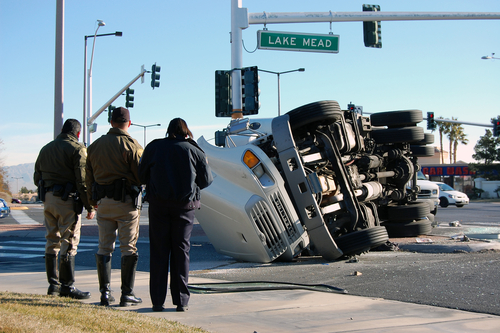
Large trucks and tractor-trailers are huge vehicles, weighing up to 80,000 pounds. Since the average passenger vehicle weighs in at around 5,000, they’re simply no match for these enormous machines. Last year, of the 97,000 people injured in a multi-vehicle accident involving a large truck, 17,000 injured persons were in the large truck, and 80,000 were in the other vehicle. If you find yourself involved in a truck accident, take the following steps to give your claim the strongest possible chance for success.

Get medical help

Before anything else, ensure that you and your passengers’ medical needs are cared for. Even if you are not seriously injured, see a doctor right away for a checkup. You may have injuries you didn’t know you had. Additionally, injuries can persist or become more severe, and a doctor’s records of their presence immediately after a crash can help you recover your costs of treatment later.

Take Photos

Take as many pictures as you can from the scene of the crash, showing the position of the vehicles, and any debris thrown from the crash site. These photos can help an accident reconstruction expert show an insurer or court what happened in the crash, and any errors that the drivers made.

Talk to Witnesses

Be sure to get the name and contact info of anyone who might have seen the crash and could support your account in a deposition or in court.

Make sure there’s a police report

A police report will provide an objective account of what happened in the crash and may be required by your insurance carrier when you make a claim.

Don’t sign any statements

Truck insurers can be aggressive in attempting to get victims to back down or take less than they deserve. They might appear at the accident site and try to coerce you into making a statement before your shock has subsided or you’re even sure what’s going on. Don’t make any statements about what happened, and do NOT admit fault before you’ve had a chance to speak to a lawyer.

Talk to an attorney experienced in truck accident claims

Truck accident claims are complex. There are almost always multiple defendants involved, making litigation more challenging. Hundreds of federal and state rules apply to long-haul commercial truck driving, including ones that govern how long a driver can spend behind the wheel in a day and how a truck must be loaded. Violation of these laws can have an impact on your claim for damages, making it important to find an attorney who understands these laws and will use them in support of your claim.

If you’ve been hurt in an accident with a semi-truck, 18-wheeler, or other large truck in Alabama, seek knowledgeable and compassionate legal help in making your claim for personal injury damages by contacting the Montgomery truck accident lawyers at McPhillips Shinbaum for a consultation, at 334-262-1911.

Collisions in Parking Garages and Lots

It isn’t hard to see why parking lots and parking garages are frequently the site of car accidents—each driver is distracted by either trying to pull out of a spot, trying to find a spot, or by the pedestrians walking in every direction. Additionally, some drivers might not even be sure of who has the right-of-way. Even when occurring at low speed, a parking lot accident can still cost a substantial amount in repairs or cause a serious back, neck or other injury. Read on to learn what you need to know after you’re in an accident in a parking lot.

Who has the right of way in parking lots?

Determining who was at fault in an accident often comes down to who had the right-of-way in a given scenario. Parking lots are generally split between drivers on the thoroughfares (the wider lanes which lead to the street), and drivers in feeder lanes (smaller lanes which start and end with thoroughfares) or backing out of spots. The drivers on the thoroughfares are the ones with the right-of-way.

Take pictures of the crash

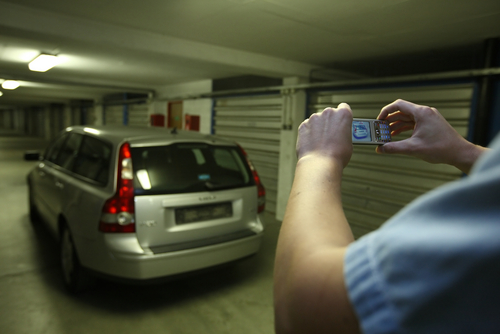
In order to prove who had the right-of-way when the crash occurred, it can help to take photos of the accident exactly as it happened. If you are in a portion of the parking lot where there is not a great deal of traffic, it may be safe to take photos before moving your cars, but if not, pull off to the side. Speak with anyone walking nearby who may have seen the accident and could describe what happened.

Security camera footage can help

If someone hit your car while you weren’t near your vehicle and did not leave a note, they’ve not only done something highly rude, they’ve committed a violation of the Alabama Code on motor vehicle accidents. If the driver left the scene of the accident before identifying themselves, or if you and the other driver disagree about what happened in a crash, speak with the facility’s security offices right away about whether a security camera may have captured the incident, allowing you a way to determine what happened in the crash. You should also have the security officers make a report of the accident to present to your insurer, as police are less likely to make a report of an incident which occurred on private property monitored by its own security personnel.

If you’ve experienced a personal injury or property damage in an Alabama car accident, ensure that you receive all compensation to which you’re entitled by contacting the knowledgeable and trial-ready Montgomery personal injury attorneys at McPhillips Shinbaum for a consultation on your case, at 334-262-1911.

Firm Attorney Releases Book about Life and Career

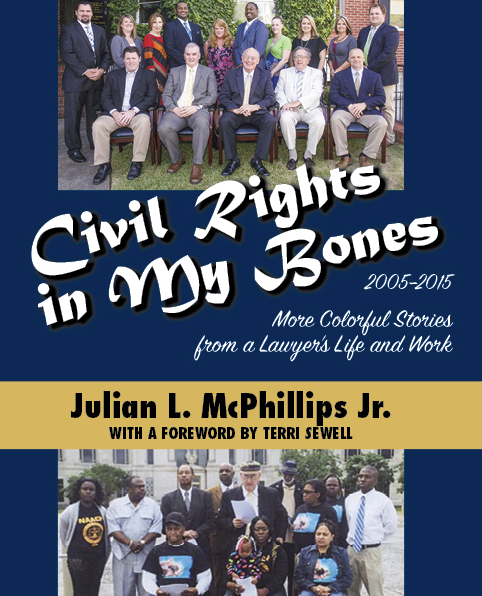
Julian L McPhillips, partner at the McPhillips Shinbaum law firm, has recently had a book published by New South, Inc. The book is entitled “Civil Rights in My Bones: More Colorful Stories from a Lawyer’s Life and Work 2005-2015.” This memoir covers the most recent phase in Mr. McPhillips’ life and career as an advocate for consumer rights, the rights of the criminally accused, and other social and civil rights matters. Included are details of some of the major cases Mr. McPhillips has handled in the past decade for the firm in employment law and other areas, as well as some fascinating developments in Mr. McPhillips’ personal life. The book follows up on “The People’s Lawyer: The Colorful Life and Times of Julian L. McPhillips, Jr.,” also published by New South Books, which covers the earlier period of Mr. McPhillips’ life and career.

Those interested in learning more or possibly purchasing the book can follow this link to the book description at the New South Books website. The book is also available as an eBook for Kindle, Nook or iPad.

Accident Resulting in Severe Brain Injuries Blamed on Snapchat

The developers of the social media app Snapchat are being sued for one man’s injuries in a serious car accident. The victim, Wentworth Maynard, claims that the app’s unreasonably dangerous speed filter drew the at-fault driver’s attention away from the road, resulting in the crash.

Christal McGee, then 18, was out driving her Mercedes with three friends on the night of September 10, 2015. Maynard’s lawsuit claims that McGee was using Snapchat’s speed filter to take photos while driving; the filter measures the user’s speed at the time the photo is taken, and Maynard asserts McGee was trying to get it as high as it would go. At around 11:15 pm, as Maynard attempted to enter the highway on which McGee was driving, McGee slammed into the driver’s side of Maynard’s vehicle, sending the car spinning into the center embankment. According to a reconstruction of the accident performed by Maynard’s expert, McGee was traveling at 107 mph at the time of the crash. McGee did not receive a citation on the night of the accident, but after a selfie that McGee took using Snapchat while still strapped to a gurney captioned “Lucky to be alive” was released to the media, local police opened an investigation into the accident.

Maynard was transported to the intensive care unit, where he would proceed to spend the next five weeks. His attorneys report that he lost 50 pounds, has suffered permanent brain damage as a result of the accident, cannot move around without the assistance of a wheelchair or walker, and has been unable to return to work. He is suing both McGee and the makers of Snapchat for money damages to compensate him for his expenses related to these injuries. Maynard claims that past accidents which resulted from drivers’ use of the speed filter, as well as calls from online petitions and safety experts to disable the speed filter, made Snapchat aware of the dangers of the filter. He claims that Snapchat’s failure to disable the speed filter constituted negligence which makes them liable for injuries resulting from use of the filter. Snapchat has stated that they have provided sufficient warning to their customers, both in the app’s terms of use and when turning on the speed filter, that users should not “snap and drive,” and that this warning is sufficient to relieve them of any liability for accidents resulting from use of the filter.

If you or someone you love has been hurt by a distracted driver in Alabama, seek help from an experienced car accident attorney to ensure you’re fully compensated for your injuries by contacting the Montgomery personal injury attorneys at McPhillips Shinbaum for a consultation, at 334-262-1911.

Automakers Commit to Adding Automated Braking to All New Cars

The National Highway Traffic Safety Administration (NHTSA) has recently announced that 20 automakers, which supply 99% of the new vehicles available on the American market, have agreed to make Automatic Emergency Braking (AEB) systems a standard feature on all new vehicles. The manufacturers anticipate that all new vehicles should come with the safety feature by September of 2022. Safety organizations are enthusiastic about the vast number of crashes and injuries the change is expected to prevent.

According to the NHTSA, approximately a third of all police-reported accidents involve a rear-end collision. AEB systems work to prevent these types of crashes and, according to research, are excellent at doing so. The systems work by using cameras, radar, and lasers to inspect the roadway for objects or slowing traffic. When the system identifies a hazard in the road ahead, it will issue a warning to the driver that some sort of evasive maneuver must be taken to avoid a crash. If the driver fails to change course or take sufficient action, the AEB system intervenes. Crash-Imminent Braking systems will automatically apply the car’s brakes when the driver fails to do so whatsoever, whereas Dynamic Brake Support systems will increase the amount of braking power being applied by the driver when that amount is insufficient to avoid a crash. Front-crash warning (FCW) systems, a related but less-advanced safety feature, will also scan the road and warn of an imminent collision, but they have no ability to apply the car’s brakes.

According to research comparing cars with FCW and AEB systems to those without such systems, the additional safety features make a great difference in the likelihood of a serious crash occurring. According to studies conducted by the IIHS, cars equipped with only FCW systems are 23% less likely to get into a crash than those without that feature. AEB systems are found to prevent even more harm, making cars 39% less likely to be involved in a police-reported crash, and 43% less likely to be involved in an injury accident.

Cars may have more and more automated features, but if and when those features fail, the driver remains the responsible party for any accidents. Experts caution that even the most advanced crash-prevention systems can miss upcoming crashes or simply malfunction, and that drivers should remain attentive and engaged while driving to prevent injuries.

For skilled and determined legal assistance with claims for damages after an Alabama car accident, contact the Montgomery personal injury attorneys at McPhillips Shinbaum for a free consultation on your case, at 334-262-1911.

What is an Expert Witness, and How Can One Help My Car Accident Lawsuit?

Most car accident claims are resolved with a settlement before they reach the point of going to trial. However, some claims become more hotly-contested, requiring an injured plaintiff to present all evidence available that supports a claim for damages. While it is valuable to provide eyewitness testimony from the injured victim and others who saw the crash, a claim can also be bolstered with testimony from expert witnesses.

Expert witnesses are individuals who have established themselves as authorities in a certain field relevant to a claim for damages, and can provide a more objective, evidence-based perspective on how and why an accident occurred, or interpreting certain evidence for a judge and jury. Some experts you might see testifying in a car accident lawsuit include:

Accident Reconstruction Experts

Reconstruction experts can use physical evidence and photos from the scene of an accident to create visual models of the accident itself, as well as offer an opinion on who was at fault. Reconstruction experts can also testify about how evidence such as skid marks — or a lack thereof – show that the at-fault driver was distracted, inebriated, or asleep at the time of the crash.

Economic Expert

For those unexperienced with the true costs associated with serious car accident injuries or long-term medical care, the damages a victim requests in a personal injury accident can seem extravagant and unnecessary. An economic expert can put those numbers in perspective and offer data explaining the source of those costs, so that a jury can understand the basis for a request for damages. Economic experts can provide an estimate of the costs of rehabilitation for your particular injuries, the cost of your lost earning capacity, or the cost of in-home care.

Medical Expert

Medical experts provide necessary interpretation of your medical records and injuries to the jury, including how the accident in question resulted in the injuries you incurred. These experts can also provide a prognosis for recovery and testify to the extent of future treatments that the injuries will require.

If you or someone you love has been injured in an automobile accident, contact the skilled and compassionate attorneys of McPhillips Shinbaum for a free consultation, at 334-262-1911. Thank you.